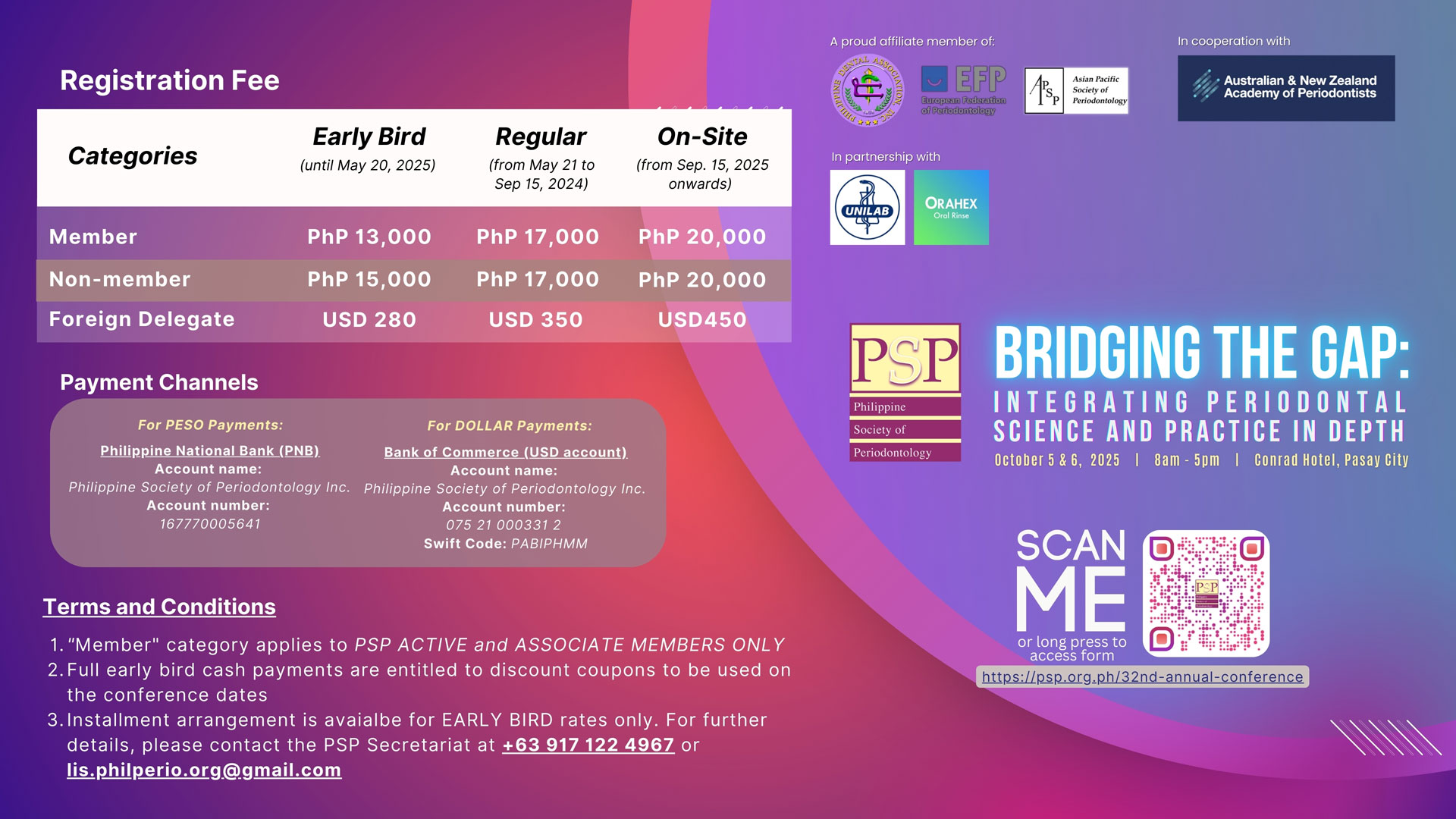
32nd PSP Annual Conference
Conrad Manila, Mall of Asia Complex, Pasay City
Sorry…This form is closed to new submissions.
https://youtube.com/shorts/0Dp0IHklKuk?si=F2MwYyW-O34gCwFd 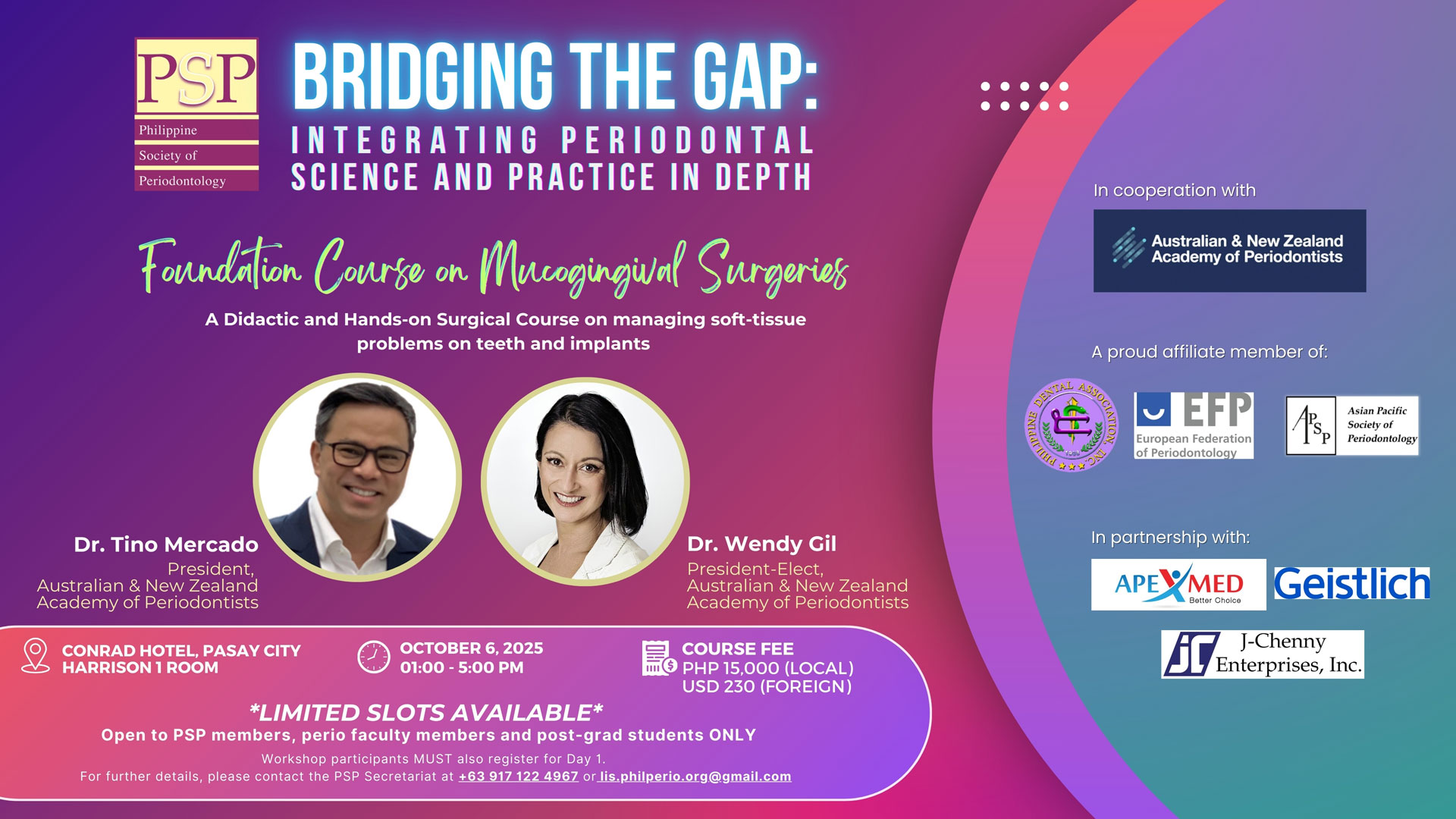
https://youtube.com/shorts/0Dp0IHklKuk?si=F2MwYyW-O34gCwFd
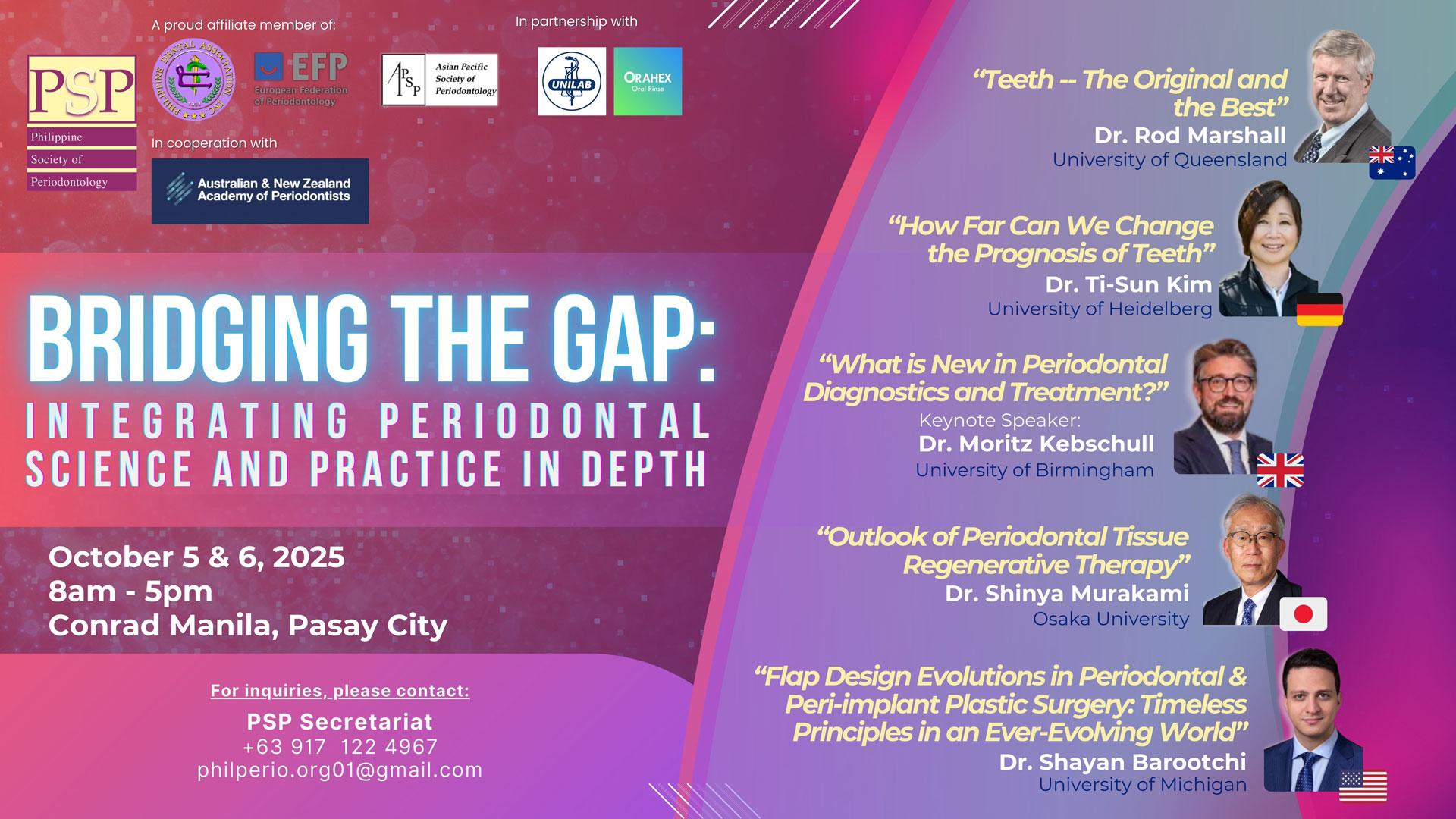
In recent years there has been a tendency to ignore the benefits of retaining periodontally involved teeth and instead replacing these teeth with implants. This lecture will review the evidence for this approach and discover that on almost every count, retaining teeth is the better approach.
The long-term evidence for retaining teeth is substantial compared to the implant approach which is weak at best and worrying at worst. Ethical practice demands that we look at all the evidence and decide on the best approach with our patients. While implants may be a good approach for missing teeth, periodontal therapy is a very good approach to prevent missing teeth.
Periodontal disease is a major contributor to tooth loss, but with appropriate assessment and management, many periodontally compromised teeth can be retained. This presentation will explore the factors that influence prognosis, including clinical, systemic, and behavioral considerations. We will examine different prognostic classification systems and discuss treatment options to enhance long-term outcomes. Participants will gain insights into decision-making strategies for managing compromised teeth effectively.
Professor Emeritus and Specially-appointed Professor,
Department of Periodontology and Regenerative Dentistry,
Osaka University Graduate School of Dentistry
It is clinically possible to enhance the biological activities of mesenchymal stem cells within periodontal ligament and stimulate periodontal regeneration. Basic Fibroblast Growth Factor (FGF-2) is well known to stimulate the proliferation, migration and differentiation of various cell types and induce angiogenesis. Through a series of clinical trials, we demonstrated that topical application of 0.3% FGF-2 into intraosseous alveolar bone defects stimulated significant periodontal regeneration and have finally developed the world's first periodontal regenerative medicine (Regroth®). Interestingly, recent clinical studies demonstrated that combination with Regroth® and osteoconductive scaffold enhanced the efficacy of this medicine. Furthermore, we found that Regroth® promoted new bone formation and subsequent osseointegration around dental implants and promoted the stability of implants with low primary stability.
Another important approach for periodontal regeneration is stem cell transplantation therapy. We have been working on the auto-transplantation therapy using adipose-tissue derived multilineage progenitor cells (ADMPC) for many years. Preclinical and clinical studies confirmed that auto-transplantation of ADMPC into intraosseous alveolar bone defects stimulates periodontal regeneration in the application site. The ADMPC therapy is now offered to periodontitis patients as an advanced medical treatment in Japan. In my presentation, action mechanism, efficacy and safety of the above-mentioned therapies are explained, and future prospect of regenerative dentistry using these therapies is discussed.
Soft tissue management is a cornerstone of periodontal and peri-implant therapy, playing a crucial role in both esthetic and functional outcomes. This lecture will provide an in-depth exploration of soft tissue grafting techniques for gingival recession and root coverage of natural teeth, as well as soft tissue augmentation around implants management of biologic and esthetic complications.
Beyond soft tissue procedures, the presentation will also cover techniques and key regenerative factors essential for achieving successful outcomes. A strong emphasis will be placed on the indications and applications of various surgical approaches, graft materials, and biomaterials, particularly in reducing surgical invasiveness and optimizing patient-reported outcomes.
Moreover, the role of soft tissue augmentation around implants will be highlighted not only from an esthetic perspective but also in relation to peri-implant health, stability, and long-term implant success-a concept particularly relevant in the realm of immediate implant therapy.
An evolution of flap designs for soft tissue grafting of teeth and dental implants will be highlighted, with the inception of the current Tunneled Coronally Advanced Flap (TCAF).
Through evidence-based insights, clinical case discussions, and advanced surgical techniques, this session aims to equip clinicians with the knowledge and skills necessary to achieve predictable, long-lasting results in periodontal and implant soft tissue management.